
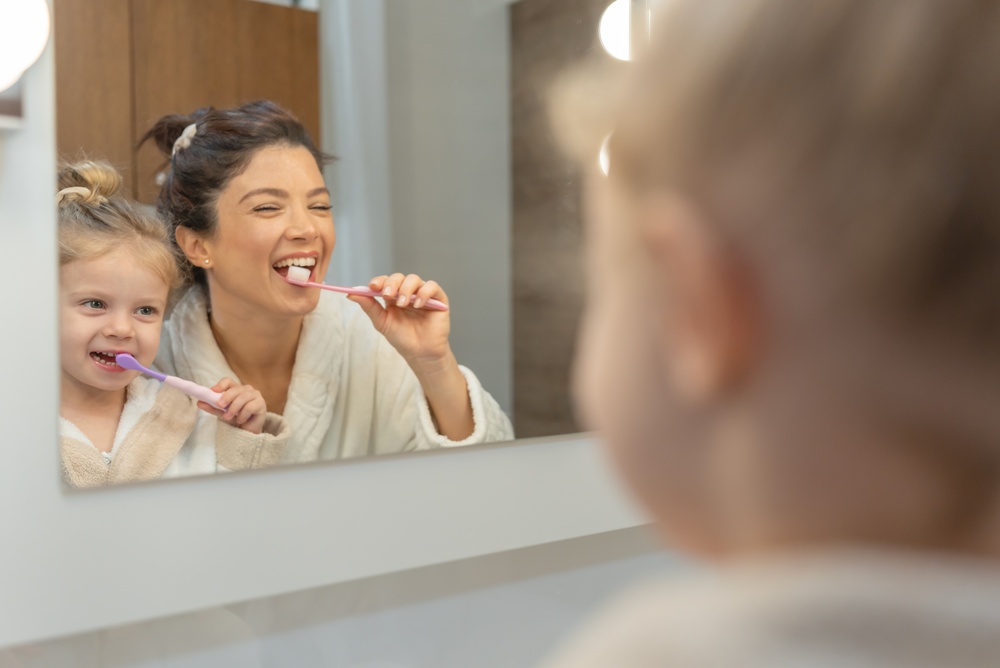
The Best Way to Brush a Toddler’s Teeth
11 Jun 2026
Brushing a toddler’s teeth is one of those parenting tasks that sounds simple until you are actually doing it. Wriggling, clamped mouths, and outright refusal are the norm for many families, and it happens at an age when the teeth are at real risk of decay.
This article gives you a clear, practical guide to brushing your toddler’s teeth well, including when to start, what products to use, how to do it step by step, and how to handle a child who will not cooperate. It is written for parents and caregivers in the northern Greater Toronto Area navigating the early years of their child’s dental care.
Here is what we cover:
- When to Start Brushing Your Toddler’s Teeth
- What You Need
- Step-by-Step: How to Brush a Toddler’s Teeth
- What to Do When Your Toddler Refuses
- Building the Habit Early
When to Start Brushing Your Toddler’s Teeth
Start brushing as soon as the first tooth appears, which is typically around six months of age. Baby teeth are not temporary placeholders. They hold space for the permanent teeth coming in later, help your child chew and speak, and are fully susceptible to decay. Early cavities in baby teeth can cause pain, infection, and problems with the incoming adult teeth if left untreated.
Before teeth appear, you can wipe your baby’s gums with a damp cloth after feedings to remove milk residue and establish the routine of cleaning the mouth. Once that first tooth comes in, switch to a soft-bristled toothbrush with fluoride toothpaste.
The Canadian Dental Association recommends that children see a dentist within six months of the first tooth appearing or by their first birthday, whichever comes first. That first visit is as much about education for parents as it is about examining the child.
If your toddler has not had their first dental visit yet, now is the time. Book an appointment at Kids Dental Group.
What You Need
Getting the right tools in place makes the job easier and more effective.
Choosing the Right Toothbrush
Use a soft-bristled toothbrush with a small head sized specifically for children under three. Harder bristles and adult-sized heads make it difficult to clean small mouths thoroughly and can irritate delicate gum tissue. Replace the brush every three months or after any illness.
For very young toddlers, a silicone finger brush can ease the transition from gum wiping to toothbrush use, though it should be replaced with a handled toothbrush as soon as your child is comfortable with it.
How Much Toothpaste to Use
Use only a smear of fluoride toothpaste, about the size of a grain of rice, for children under three. From age three onward, increase to a pea-sized amount. These quantities are safe to swallow in small amounts, which matters because toddlers cannot reliably spit yet.
Fluoride toothpaste is important. It strengthens enamel and reduces the risk of cavities. Fluoride-free or “natural” toothpastes for children do not provide the same protection. If you have questions about fluoride, bring them to your child’s dentist at their next visit.
Step-by-Step: How to Brush a Toddler’s Teeth
Positioning is the starting point. The most effective position for brushing a toddler’s teeth is to have your child lie down with their head in your lap, or to stand or sit behind them at the bathroom sink with their head tilted back slightly. Both positions give you a clear view of all surfaces and the control to do the job properly.
Follow these steps:
- Apply a grain-of-rice-sized smear of fluoride toothpaste to the brush.
- Start with the outer surfaces of the upper teeth, angling the bristles at a 45-degree angle toward the gum line.
- Move to the outer surfaces of the lower teeth.
- Brush the inner surfaces, upper then lower.
- Brush the chewing surfaces of any back teeth.
- Do a final pass along the gum line where teeth meet gum tissue, as this is where plaque accumulates fastest.
- Brush for approximately two minutes total. A short song or a visual timer helps.
You do not need to rinse with water after brushing. Letting the fluoride sit on the teeth provides more protection. Simply have your child spit out any excess.
What to Do When Your Toddler Refuses
Refusal is normal and does not mean you should skip the brushing. Skipping reinforces avoidance and allows plaque to accumulate.
Keep your approach calm and consistent. Toddlers are more likely to accept brushing when it is clearly a non-negotiable part of the routine rather than a negotiation. Frame it the same way you frame putting on shoes or getting in the car seat.
Some strategies that help:
- Let your toddler hold the toothbrush first and take a turn “brushing” before you take over. Giving them some control reduces the power struggle.
- Use a song, a short video, or a two-minute timer to make the duration predictable.
- Try different positions if the standard one is triggering resistance. Some children do better standing than lying down.
- Brush your own teeth at the same time, so they see it as something everyone does.
- Rotate between a few different brushes to maintain novelty.
If resistance is extreme or sustained, speak to your child’s pediatric dentist. Persistent refusal can sometimes be related to sensory sensitivities or oral discomfort that is worth investigating.
Building the Habit Early
The habits formed before age five have a lasting influence on how children relate to dental care throughout childhood and into adulthood. A child who grows up with a calm, consistent brushing routine and regular dental visits is significantly less likely to develop dental anxiety or widespread decay than one who does not.
Twice daily brushing, morning and before bed, is the standard. The bedtime brush is the more important of the two, because saliva production drops during sleep and the mouth becomes more vulnerable to acid from any remaining food or drink. As your child gets older, understanding what good brushing looks like at each stage helps you stay on top of their technique. For guidance on brushing quality as they grow, see how to tell if a child is brushing properly.
Kids Dental Group serves families across Richmond Hill, Markham, Stouffville, and the surrounding northern GTA with pediatric dental care from the first tooth through the teen years.
Starting early makes all the difference. Book your toddler’s first dental visit at Kids Dental Group.<