Crowded Teeth in Children: Causes, Signs and When to See an Orthodontist
12 Nov 2026
Medically reviewed by Dr. Krista Lee at Kids Dental Group
Your child’s adult teeth are coming in, and they look crowded. Some crowding is a normal part of growing up. Some are worth having an orthodontist check. Here’s how to tell the difference, what causes crowding, and what treatment involves.
In this guide:
- What are crowded teeth?
- Is some crowding normal?
- What causes crowded teeth in kids?
- Mild, moderate and severe crowding
- Crowded bottom teeth vs. top teeth
- Why crowding matters
- When to book an orthodontic assessment
- How orthodontists treat crowding
- What happens at a consultation
What are crowded teeth?
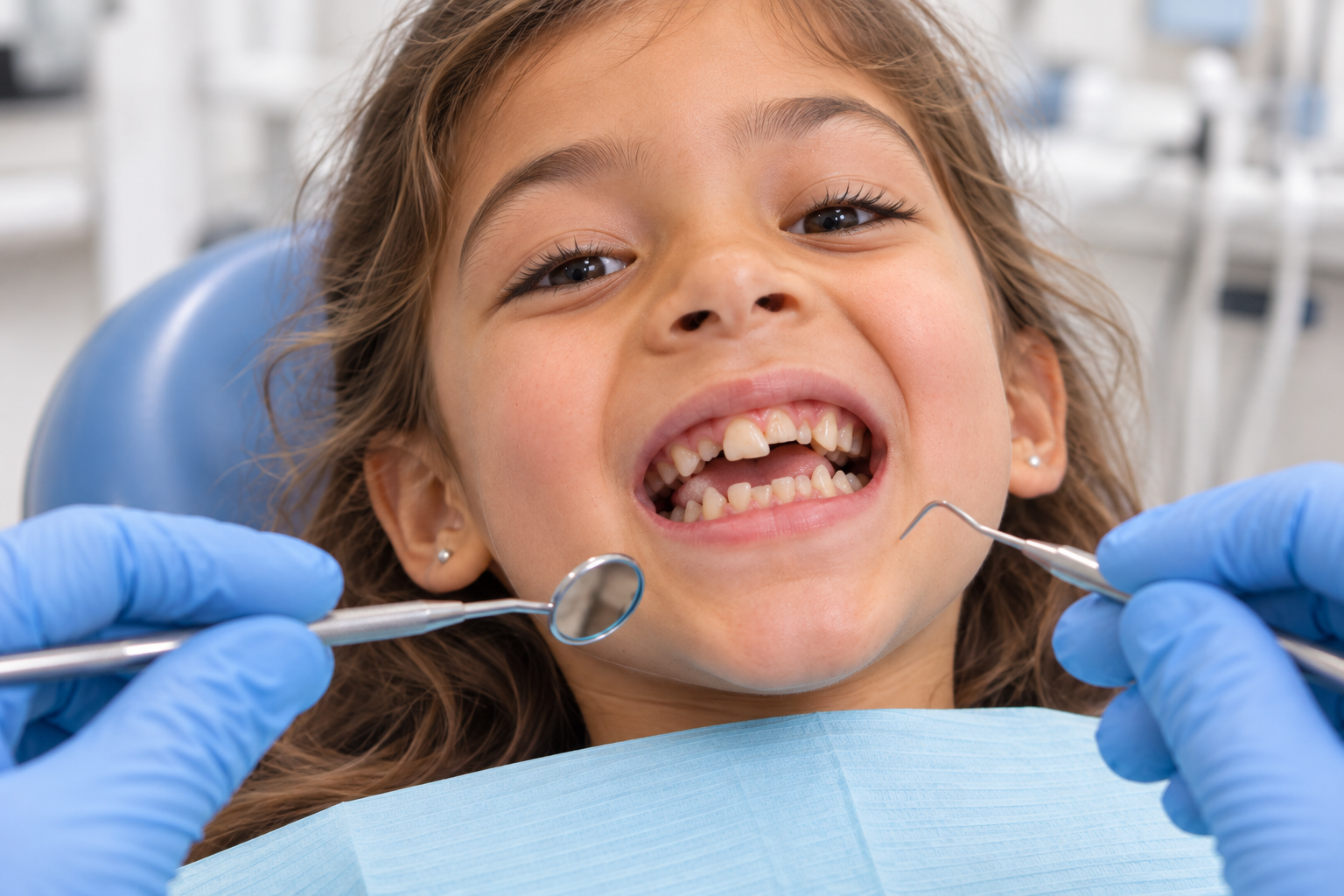
Crowded teeth happen when there isn’t enough room in the jaw for all the teeth to line up. Teeth may overlap, twist, or push forward or back out of line. Dentists call this teeth crowding; you may also hear “overcrowded teeth.”
Is some crowding normal while adult teeth come in?
Often, yes. Between about ages 6 and 8, the four lower front adult teeth come in. They’re much larger than the baby teeth they replace, so mild crowding is common at first. As the jaw grows and more baby teeth fall out, some of that crowding settles on its own.
What doesn’t usually settle on its own is crowding that’s moderate or severe, gets worse over time, or affects the bite. If adult teeth are coming in behind baby teeth that haven’t fallen out, read our guide to shark teeth in kids.
What causes crowded teeth in kids?
- Jaw size vs. tooth size. The most common cause. Large teeth in a smaller jaw simply don’t have room.
- Genetics. Jaw and tooth size are inherited, so crowding often runs in families.
- Losing baby teeth too early. Baby teeth hold space for adult teeth. If one is lost early to decay or injury, nearby teeth can drift into the gap and block the adult tooth.
- Baby teeth that stay too long. A baby tooth that doesn’t fall out can push the adult tooth out of line.
- Habits. Long-term thumb sucking, pacifier use or tongue thrusting can affect how teeth and jaws develop. See our habit-breaking appliances page.
Mild, moderate and severe crowding: what’s the difference?
Orthodontists grade crowding by how much space is missing.
- Mild crowding: a slight overlap or twist in one or two teeth. Often monitored first.
- Moderate crowding: several teeth overlap or sit noticeably out of line. Treatment is usually recommended.
- Severe crowding: teeth are blocked from coming in, or sit well outside the arch. Earlier treatment is more likely.
Only an orthodontist can grade crowding accurately. It takes an exam and usually X-rays to see how much space the incoming teeth will need.
Crowded bottom teeth vs. top teeth
Crowded bottom teeth are the most common pattern parents notice, because the lower front teeth come in first and have the least room. Lower crowding is often mild and may improve as the jaw grows.
Crowding in the upper teeth is more visible when your child smiles. An upper canine with no room may come in high on the gum or not come in at all, which is worth having checked.
Why crowding matters
Crowding isn’t only about looks.
- Harder cleaning. Overlapping teeth trap food and plaque, which raises the risk of cavities and gum inflammation.
- Uneven wear. Teeth that meet at odd angles can wear or chip unevenly.
- Bite problems. Crowding can push teeth into a crossbite or affect how the jaws meet.
- Confidence. Some children become self-conscious about their smile, especially as they get older.
When to book an orthodontic assessment
Book an assessment if you notice:
- Adult teeth overlapping, twisting or coming in out of line
- Crowding that looks worse over several months
- An adult tooth with no room to come in, or a baby tooth that won’t fall out
- A baby tooth lost early to decay or injury
- Trouble brushing or flossing between crowded teeth
- Teeth that don’t meet properly when your child bites down
Orthodontic associations generally recommend a first orthodontic check by around age 7, even if nothing looks wrong. For more on timing, see when to take your child to the orthodontist.
How orthodontists treat crowding
Treatment depends on your child’s age, how severe the crowding is, and how much growth is left.
- Monitoring. Mild crowding in young children is often watched at regular check-ups.
- Holding space. If a baby tooth is lost early, a space maintainer can keep room for the adult tooth.
- Early (Phase 1) treatment. For some children, treatment while the jaw is still growing makes later treatment simpler.
- Braces. The most common way to straighten crowded teeth, usually once most adult teeth are in.
- Invisalign. Clear aligners can treat many cases of mild to moderate crowding in teens.
- Extractions. In some cases of severe crowding, removing a tooth creates the room needed. This is decided case by case.
After treatment, wearing a retainer as directed keeps teeth from shifting back.
What happens at a consultation at Kids Dental Group
Our orthodontists examine your child’s teeth, bite and jaw growth, and take X-rays if needed to see the incoming adult teeth. You’ll leave knowing whether treatment is needed now, later, or not at all, and what the options are.
Because we offer pediatric dentistry and orthodontics in one practice, your child’s dentist and orthodontist work from the same records. Eligible patients may be able to start treatment the same day. See what to expect at your first orthodontic visit.
Book an orthodontic consultation at our Richmond Hill, Markham, Stouffville or Hillcrest location.
FAQ
Will crowded teeth fix themselves? Mild crowding of the lower front teeth sometimes improves as the jaw grows. Moderate or severe crowding usually doesn’t, and can get worse as more adult teeth come in.
Can crowding come back after braces? Yes, teeth can shift over time. Wearing a retainer as your orthodontist directs is the best way to keep them in place. [Link: retainers post]
Does Invisalign work for crowded teeth? Invisalign can treat many cases of mild to moderate crowding. Severe crowding may need braces or other steps first. Your orthodontist will recommend the right option.
Is it too early to see an orthodontist? A first check by around age 7 is generally recommended. Most children won’t need treatment then, but the orthodontist can spot problems early. Read more about the right age for braces.